Transitions

f4e93e66-6e0a-4d6e-a9f5-8afd5125c172The darkest time and in the shadows things fall away.

I had a coaching session about fifteen months ago with Lauren Barber when I expressed a wish to stop working in education. After the session I was full of determination, I began unpicking strands of that work, but I found it hard to put it all down. It was so safe and known and people get it.  The work kept coming in dribs  and drabs. I kept saying yes. I kept telling people I wanted to leave education. But I kept doing it…Then a big contract ended suddenly, and at around the same time we moved and I lost my work space.

I can be pretty slow on the uptake at times. It seems to me obvious today that this was an ideal time to make a change. I could have said thanks to the universe and got busy with my “joy job” of healing, guiding and supporting others.

Instead I panicked and started trying to breathe new life into that old work stream. I grabbed at straws. I stumbled on with a foot in two camps, lurching from one kind of work to another, over-stretched, confused, anxious. I kept looking back and being angry with the way things had worked out, annoyed with business colleagues and the fact that I felt badly treated. It’s not fair (stamps feet, sits on floor, pouts). I was working hard to create my heart work stream but it was slow, stop-start progress, as I lacked the focus and energy, the force of intention and I split my attention across five different jobs.

Today I was once again looking back, feeling frustrated and betrayed, how hard I’ve worked, I told myself, and what for? It came suddenly, out of the sub-conscious,  a good old slap from the universe. Hey sugar plum, say my guides, what are you moaning about? They did you a favour! This is what you wanted, what you’ve been dreaming about and manifesting the past eight years, a little thank you would be nice, instead of your personal pity-party. Say thanks to those people who “let you down” say thanks for the fact that they peeled away the things you no longer needed…(universe folds arms, taps feet, looks kind of pissed).

Oops.

Ok, erm, noted.

I’m sure I’ve done this before. I wish for something and then when it shows up I keep looking beyond it, like I can’t see it somehow, or can’t believe it.

This month I’m doing work in two of my classes on transformations (in The Circle  ) and transitions (with  Angel Tribe). It’s time to do differently. Stop looking back and just put all that shiz down and move the flip on. It’s a gosh darn dream come true to have a chance to do the new work I’ve been given. The old served a purpose, had its place, but it’s time to say goodbye, create a little magic to let it go and move on.


3E4BF1C7-D84A-4FE4-A452-F4A6E87D2FD6.jpeg


Adventure stories for boys

8235349C-DC45-4D2B-9D89-2E54C3498514.jpegHe is about nine years old. They have crossed the railway lines, steam engines belching smoke and fire. Sooty dragons passing. The castle is under siege and they must protect it. They scale the volcanic mass, ancient lava spell-fixed, frozen beneath them, its jagged forms gifting hand and toe holds. The upward journey is easy. It is the descent which traps them. Ignomy as the fire brigade are called to get them down and later, his mother’s strap across the back of his legs to teach a lesson. It stings.



He learns. To be more careful next time, avoid being caught…there’s things to be doing in this city, scaffolding to climb, bonfire gangs and gaps in the gazelle fences giving a free pass to the zoo. A boy has things to be about .

~for Andrew x

Dreaming awake

dream

I realised a while ago that teaching wasn’t for me. Perhaps it was the constant anxiety and daily nausea. Or the insomnia and the migraines. Or the TIA. Eight years ago I decided it was time for a change. Since all the stress I had been increasingly interested in complementary therapies. I’d been using Bach essences, having massages and using aromatherapy at home. I signed up for a reflexology course. The plan (fateful words) was to leave school work and set up my own clinic. Mid way through the course I left my regular job, started a small admin role to bring in a little regular money and began my business.

Two weeks later my husband, deep in the midst of serious mental health needs, left.

Plan B. Two children to feed, bills to pay, dealing with the loss of an eighteen year marriage, I went back to school work.

In spite of all the crazy I finished my reflexology training and, in between a range of different school jobs, I saw clients in the evenings and at weekends. Every now and again I’d have a go at making it a bigger part of my life, but it stayed small. Maybe everything else crowded it out. Maybe other things in my life’s garden were too prominent and stole the sunlight it needed to grow properly.

Yet other things didn’t really thrive either. I took on a significant role in a special school. It was a job I had wanted for a few years. Within eight months I had burned out. Barely able to walk, constantly dizzy, unable to drive, I left.

I was really confused. I’ve looked for divine guidance for over thirty years. But all my tried and tested tools seemed to be failing. The compass was spinning madly and nothing made sense. I’d try different paths only to hit another dead end. The panic started then, as I plunged down different avenues seeking an answer, too scared to sit still and get my sense of place back.

I don’t know when the shift started. Somewhere in the early summer of 2016, on dew soaked grass, as the sun rose. I was tuning in to natural rhythms, the seasons, the moon. I was using oracle and tarot cards (shuffling soothes my soul). I was making friends with stones, crystals, shells. The fountain-pen edges I had inked onto my life in my teens began to bleed and blur; veins opening, leaking.

It was still only a few hours a week but my therapy work began to push it’s way through. People began to call, I began adding to my tools – Reiki, crystal healing, essences and coaching skills.

The auspicious moments are only so in hindsight. A chance meeting through work. A general conversation about hopes and dreams, about visions and values. Seven months later an exchange of messages and an offer, work in a holistic therapy centre as part of a team of healers.

Looking back the determination, the dog-with-a-bone mentality that refused to let go, was worth it. Looking back the gut knowledge that this was part of my essential self was right. Learning to trust that way of knowing comes hard. Easier to hold on to popular ideas, to fall back on conventional wisdom.

The lesson for me is that its ok to dream, its ok to try, and try again, and then start over. To listen to your body. To listen to the clouds and patterns on the beach or the birds thrown against the sky, like lyrical confetti. Its ok to change your mind, be scared, gain a new perspective, do things differently. Its ok to doubt and have hope at the same time.

Sometimes doors open. Sometimes they close. Sometimes you have to wrap your dreams in gossamer and moonbeams and bury them in your heart for a while.

My friend B says “what’s for you will not go by you.” Maybe she’s right ❤

fairy

Twisted

Some dreams have teeth.  When you wake the marks show on your skin, the images burned behind waking eyes.

We are in a field, tending pigs, my husband, myself and a child (maybe our child). We are focussed on the animals, watching their behaviour, noticing how they interact.  It is a flow moment, we are captivated, enjoying the time outdoors, completely at ease with this time together.

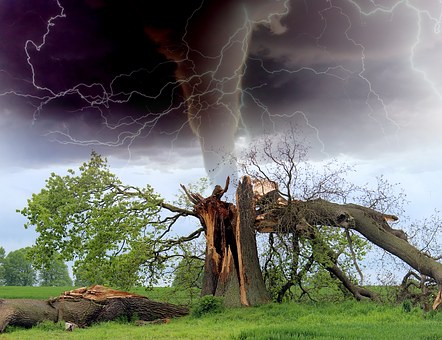
twisterI look up. It is a wide, prairie landscape. In the distance is a rambling, ranch-style house and behind it, on the horizon, incongruous against the clear blue sky, the black spinning column of a twister.
My heart begins to pound.  Time rushes back into the void and I urge them to pack up and head for the house, but they are slow, sleepy with the relaxation and calm.  I am urgent, shouting, calling instructions, dragging at hands and possessions, picnic blankets, bags.

When we arrive back at the house it is full of people, kids on the floor playing Lego, parents on sofas chatting.  It seems we are staying with friends.  The house is surrounded by a porch and all the windows are floor to ceiling, I can see the twister through the windows.  It’s a wooden house.   When the twister hits it will splinter, the glass and nails becoming deadly shrapnel. I start to yell instructions, to try and rouse people, but they are all engrossed in their own activities, the wind is screaming now and I can’t make my voice heard over its shrieking.  Slowly, like a nightmare (oh, wait) they begin to respond. Children whine because they want to take their toys, adults seem indifferent, they are sarcastic about my panic, as though it is unwarranted, chill Fi, seriously.  I get people to collect water, some food, essential supplies.  It seems there is a basement.

Gradually the room empties.  I am checking the window, monitoring the twister’s movements, I know it could miss us, I know it could vanish back into the sky, but it isn’t. It is moving forward, sinuously snaking, brushing up shrubs and small trees in its skirts.

The last person leaves, there is still enough time for me to get downstairs. Only there isn’t. The twister has somehow jumped, it is right by the house, I try to get myself to the stairs but I am paralysed, I try to drag myself forwards, to shout. Nothing.

Everything goes black.

Half awake and before coffee I am spilling this into my journal, my eyes blurred as they watch the images again, my pen racing across the page.  I want to know what this means, what it is here to tell me.  I have dreamed of twisters before.

In this instance there is something about being asleep.  About not listening.  About being too comfortable to see the risks and dangers.

And there’s a message about putting others first.  About expending all your energy at huge personal cost to make sure others are safe and happy, even when they are busy sleepwalking themselves towards oblivion.

I know what this speak of in my life and my patterns.  I know that I need to learn when to stop.  When I have given enough. When it is ok to get myself to safety.  Lessons.  Reflections.

I wonder too about the idea of creating safe space, of what my storm-shelter looks like in the waking world. Of how I can furnish it, of how I can set in place a warning system so I know when to go. How I will bring this into reality is the work.

tornado

Journeys.

airportI dream of journeys.

I don’t record my dreams, but it feels like this has been a theme for a while.

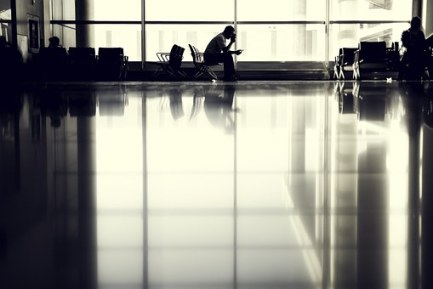
I am in an airport with my first husband, the children are younger.  We are working out where to go to catch our flight.  He leaves to make enquiries.  I am adrift in a space with red walls and charcoal grey flooring.  After a while my phone rings.  He tells me I’m in the wrong terminal.  He is in the right place and I have to get there before the plane leaves.  I don’t have my bags.  Or my children…

I am at a station.  I have a whole load of suitcases, heavy and unwieldy.  I need to get to my train.  I ask politely and am directed to platform four.  But when I get there, there is no train.  The announcements are confusing.  I look for a member of staff but there is no-one there.  I have left, as always, plenty of time, but in the last instant an announcement tells me I need to be on a different platform.  I have to cross the tracks, via a footbridge.  I cannot manoeuvre my case, despite my best efforts.I will not make it in time.  I will miss my connection.

I am on a train, looking for my seat.  I need to find the right seat, this is very important, I have a numbered ticket. I ask people in each carriage, each give me directions which I follow as best as I can. I know the guard will be furious if I’m not in the right place, but no matter how hard I try I can’t find my seat. It doesn’t seem to exist.

These.

And others like them

It is only yesterday morning that I wake up and make the connection.

Since my stroke in 2008 I have been trying to get somewhere.  I thought it was to a more balanced life.  Or to my “life purpose”. Or to wellness; the day I woke up feeling connected and peaceful and entirely aligned.  I have been working really hard – in reality, and in my thinking life – to make this happen.  I have refused to believe it isn’t possible, gosh darn it.

It has been exhausting.  And I haven’t managed to find the elusive destination (as shown in all those dreams).

Instead…

It seems I was here all along.  Suddenly and without warning it drops into consciousness, and it’s so obvious, where it wasn’t five minutes ago…this is exactly where I need to be.  In this place, with these people, doing these things.  This is it.  There’s nowhere to go. Nowhere to run.

This is such a novel idea and sensation.

To simply be.

To have time to catch my breath.

calm


The hallway

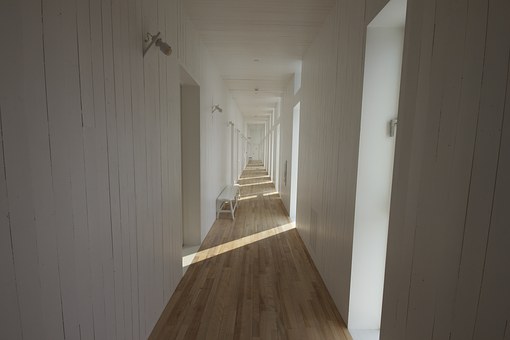
corridor

I am seventeen years old.  The walls seem to stretch forever and I can’t see the end of the hallway.  I am standing in line.  At a wooden table a man sits with a notebook.  He speaks to each person, but I can’t hear what he’s saying.  Some people head on up the corridor.  Others move to the open doorway behind the desk and pass through.

It is my turn.  He is wearing a non-descript uniform and wearing Buddy Holly glasses.  He looks up briefly, no expression on his face, and then looks back down at his page.  “You can leave now,” he says, “or stay and help sort things out.”

There is a heart-beat of a pause.

“I’ll stay and help,” I say.

He makes a note in his book.  I head off down the corridor, and return to my dream.

It was a beginning.

notebook

Unless a grain of wheat

A27A196F-2344-4077-AD81-B30FEA9DBD01.jpegIn the dark soil I wait. It is silent here.
For the longest time I dreamed of sunlight. I remembered the gentle kiss of the breeze.

Before I fell.

Now I am blind. Hidden here, waiting.

There were days I wished it sooner. I wept in frustration, put my mind to the task. I will grow! I can do this thing! Onwards!

Nothing happened.

A millipede wriggled past; an earthworm gliding. The soil grows very cold and I retreat deep into my shell.

Time.

No time.

Pause.

And silence.

What will it be like, that crack, splitting me in two? No longer myself as roots and shoots emerge.

Will I remember the darkness when I return to the sun?

Rosy

rose-2417334__340Perhaps it was the heavy, yellow blooms in her godmother’s garden, or the vast borders in the local park but for as  long as she could remember Agnes Earnshaw wanted a rose garden.  She drew roses around her exercise books, on her ruler, she even engraved them on the science benches while Mr Finch talked about Brownian motion.


Over the years she developed a collection of rose-related paraphenalia, notebooks, pencils, backpacks, cosmetic purses, t-shirts, socks.  In her first flat she had a rose-shaped rug on the sitting-room floor and purchased rose-edged crockery.  She bought small, potted roses for the window sill, but they tended to shrivel up and shed their leaves within a fortnight.  Never mind, she thought, it will be different in the garden.

Weekends were spent exploring famous rose gardens – Red House, Emmetts Garden – and she kept a copy of Classic Roses on her nightstand.

Finally the day came when she had her own garden.  A two-bed terrace in a south-coast seaside town, red and black tiles marking the path to the front door and a tiny pocket-hanky lawn with well-dug borders.

The first autumn she dug the beds through with manure, and spent the mid-winter researching varieties.  She ordered Rosa banksiae “Lutea” for the wall and the red Lancaster rose  interspersed with the more free-form Great Maiden’s Blush for the borders.  Early in February she went out to nestle her young ones into their new homes, breaking the frosted-crust of soil to dig in the bare roots.  She whispered tenderly to them about how beautiful they would be, and pressed them firmly into place with her freezing knuckles.

Now the waiting.  Each day she looked out of the window, or ventured out into the early March murk to look for buds.  The leaves began to sprout, although she didn’t expect much from the young plants.  This could take a while.

While she waited she read her subscription copy of Rose Magazine and browsed forums.  She cross-stitched roses into cushions and posted rose-scented soaps to her sister for her birthday.

Summer came.  The beds were a riot of colour.  Poppies and cornflowers emerged from winter’s sleep, sunflowers began their stately climb upwards, planted from seeds fallen from the old bird feeder left in the corner.  A honeysuckle crept up the south-facing fence and bees and butterflies crowded its perfumed blooms.

But the roses were not happy.  They grew slowly, if at all.  Something was amiss. She checked for powdery mildew, made sure they were fed.  She posted questions on the Gardener’s Almanac and tested the soil pH.  She took temperatures around the garden and sprayed them weekly.

It became a mission.  Roses were her thing and she was damned if they wouldn’t grow in her garden.  After several years she dug up her first batch of plants and started over.  Different varieties, different positions.  She enriched the soil and read late into the night, looking for clues as to why it wasn’t working. Meanwhile the poppies and cornflowers came back each year, the sunflowers thrived, the honeysuckle bloomed and wind and bird-borne treasures came to join them from neighbouring gardens, honesty and hollyhocks, aquilegia and leycesterea.  The garden was beautiful.  But there were no roses.

Finally Agnes had enough. “I have done everything right!” she wailed to her mother down the phone, “I read all the books, I took courses, I had a vision for the garden, I followed all the rules.”  Her mother suggested she contact a gardener and see what they had to say.

When she came the gardener wasn’t quite what Agnes had expected.  An older woman, dressed in worn corduroy dungarees with white hair whipped into a bun on her head.  She came with a shaggy lurcher at the her heels and smoking a pipe.  Wrinkling her eyes against the June sun she looked around the garden.  She walked around it slowly, caressing the plants that were there and stopping by each rose, as though listening.

Finally she spoke.  “It isn’t a garden for roses.” she said.  Agnes was speechless.  Then indignant, reciting the litany of her efforts.  “I hear what you’re saying,” said the gardener, “But did you ask them what they wanted?  Look at what else is growing, look at what you have here, this is a garden for poppies and cornflowers, for honeysuckle and hollyhocks, see how they’re thriving?”

Agnes felt confused.  For years she had wanted a rose garden.  She had planned for it, she had organised it, she knew all the theory, this was her dream!  “You need a different dream dearie,” said the gardener, as she left through the side gate, dog at her heels, “You need a dream of what’s here, that’s always the best place to start.”

Agnes went to the shed, her head spinning.  How could this be?  She fetched a deck-chair and placed it in the middle of the grass.  She went to the kitchen and brought back a mug of tea and sat down.For a while she wept, for the lost garden in her dreams.  Then, eyes brushed dry with her cardigan sleeve, she took a deep breath in and waited.  I will listen to this garden, she thought, I will see what is here.

Maybe it will teach me about my life. garden chair


Map work

map handsI read this poem by Carol Ann Duffy and felt that deep-gut pull of recognition.  It happened when I went back to the village I grew up in.  In my mind I could feel the paths and lanes, could see the ditch around the church and the tiny, domed graves of long- dead children. I could see the trees, ivy-smothered, where we climbed and built camps, and the wide-open expanse of the fields, flattening to the marshes on the horizon.  This was the land of Pip and the prison hulks, estuary-edged.  I could see the grass, heaped up in the middle of St. Andrew’s Walk, where we rode our bikes and tried to get enough speed to put air between our tyres and the hummocked ground.  training-165021__340I could see the brickwork at the edge of Susan’s house, overlapping enticingly like a climbing wall, and remember the sensation of trying to scale it.  I could see the road, winding black snake, looping round the corner by the shops and down to Jonathan’s house, the pampas grass waving sentinel on the front lawns.
I go back with my new husband, to show him something of where I come from.  The place runs beneath my skin like a scar; horses on the brimp, silhouetted against winter sun, the welly-deep puddles on the bridle way.  It is a liminal place, jammed at the end of the bus route, an hour from town, a dormitory village for the oil-refinery and power station then, we had a wide open garden where strawberries grew abundantly and my grandy prepared bonfires  in the autumn mist.

Firstly it is smaller than I remember.  The roads are narrower.  The vast expanse of the housing estate where we rode bikes is traversed in a few moments, the mountains of memory merely moderate landscaping.  Signs remind us that cycling is forbidden now.  The shops are shabby, the gardens cluttered with old plastic ride-ons and broken patio furniture.  The church, a cathedral once, is in fact, tiny.  I am lost between the powerful memories and the difference of reality.  Time has changed the place.  And me. I am no longer a six-year old in her cord trousers and pumps pedalling a red bike, no longer the pig-tailed eight-year old sitting in the musty shade of church waiting for Sunday School to start.  I have grown and the place has shrunk. Worst of all the prefab building which housed the primary school has been removed.  Its site forms part of the new-build school and houses crowd on the playing fields.

We drive away in a yellowing afternoon, looking out across the marshes, and I try to match the places to each other.  Memory is only partly true.

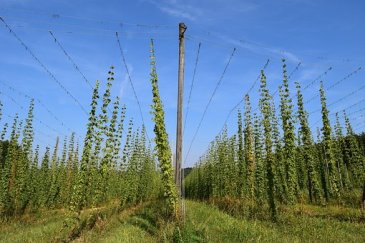
A similar moment comes when I’m walking home one day.  When I was nine we moved to a cathedral city. I take the path behind the main road, squashed between terraced side streets and a new housing estate.  I tell Simon that this was all hop fields when we used to walk this way to school.  That I went once with Martine and Natasha and we walked from Martine’s house, across the fields as far as the A2.  Martine’s family owned the farm then.  I remember the thrill of being on private land, the sense of secret wandering, exploration, the hop bines twisting above us in the late summer sun. The farm is gone now.  The oasts converted to apartments, the fields covered with tarmac, uniform shurbbery and identikit housing.  It feels like this has just happened.  That I blinked and the fields were gone.  But the estate is more than ten years old now,  and the memories come from over three decades distance.

hop fields Place is both itself and something else, the old is cleared a new layer takes it’s place.  The map is re-drawn.  But surely the land remembers.  I wonder whether it still feels the kiss of childhood steps, the wonder and secret magic of life before adolescence, like the brush of a butterfly’s wings or the step of a spider along your arm. I wonder if I am like this too.  Layered.  The child still seeking beauty and play while the woman covers her over with duties and diary commitments.  I wonder what it will be like when I re-draw the map.  When I erase the work of the past thirty years and begin again, using the stars for a compass and the earth as my blue-print.  Something sits now, beneath the skin, barely breathing, ready to crack open, on the edge of a new journey.

barley-field-1684052__340

Automotive

classic car

She is gifted it on her seventeenth birthday.  “It’s a classic,” says her Granpa, “If you look after her she’ll look after you.”  Her parents nod, smiling that smile of knowing parents have when they are in on a secret, the knowledge which comes from being three decades older.

A legacy like that captures her imagination.  She buys magazines, joins forums, spends weekends under the chassis, or the hood, tinkering and tightening.  She buys an oil can, and overalls. When she drives it to see friends, or takes them out on a summer’s day into the woods, coasting down the valleys, the windows wound all the way down, the smell of wax and hot leather, she feels pride at the way she has tended the machine, at her maintenance of the legacy.

It’s a never ending task.  The car eats oil, rust nibbles its way through the body, the parts gradually wear and are hard to replace.  She spends every spare penny keeping it going.  One Thanksgiving she opens up to her folks, “I love it,” she says,”It’s been such an important part of my life, and it was so much fun when I was younger, but it’s eating up my salary and I really need a car that works.”  “Oh my god,” they cry, “what are you saying? Your Granpa would be heartbroken, it was his pride and joy.”  Granpa looks down from the mantelshelf… it’s been three years now but she can still remember the smell of his tobacco.

She perseveres.  It’s a legacy.  She needs to keep it going.  The love, though, has gone.  This is about duty.  She repeats the story to herself, Granpa’s road trip in ’72 down route 66, her dad taking her mum on their first date.  She flicks through the photo albums.  But the shine has gone.  Her credit card is maxed out with paying for parts.

It’s a hot, August weekend.  There’s been no rain for weeks and the city is suffocating.  She decides to head up to her parents; the woods will be cooler, she figures.  It takes two hours to get beyond the city limits, traffic is nose to tail as everyone heads for the open spaces.  Eventually the roads clear, there’s not much now but dust and drying daisies, rattling in a hot wind.  She winds the window down.  She rang her parents the night before, telling them she’d be on her way.  She hints that she is bringing the car, but that she will get the train back.  She can’t face selling it for spares, the stories are too strong, she can’t face finally letting it go.  But she needs to park it up, in her minds eye the car will gradually disintegrate in the garage, the seats a commune for mice, tyres slowly emptying.

A sudden bang jolts her from the vision.  Smoke is rising from the hood, she struggles to hold the line of the road as she shifts down through the gears to bring the car to a halt at the roadside.  The smoke is thick and black, grabbing an old blanket from the back seat she tries to tamp it down. Using the blanket wadded up to hold the hot metal of the hood the peers in.  She feels the heat radiating from the sick vehicle as she stands back and considers.  In her heart she knew this moment was coming, couldn’t be put off forever.  At some point this particular journey would have to end. Dust devils whirl at the roadside as she squints along the tarmac distance, heat haze shimmering the horizon to a blur. She is still hours from home.  There is no traffic. No way to call for help.  She paces the road a while, looking at the car, hearing the stories, remembering the work she has ploughed into keeping it going.  A hawk calls  from above, circling on  a thermal.  She senses the expansive space it sits within.

For a moment the world tilts, shifts and something ends.

Wiping her soot blackened hands on her jeans, she pulls her bag from the trunk, closes the driver’s door and starts walking, each step moving her minutely away.

Time for some new stories.

woman walking