Rosy

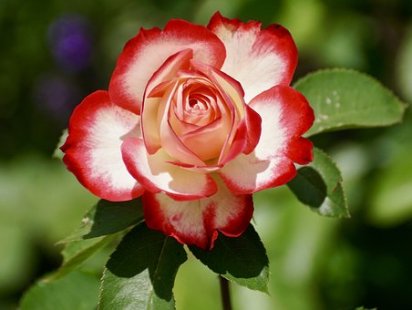
rose-2417334__340Perhaps it was the heavy, yellow blooms in her godmother’s garden, or the vast borders in the local park but for as  long as she could remember Agnes Earnshaw wanted a rose garden.  She drew roses around her exercise books, on her ruler, she even engraved them on the science benches while Mr Finch talked about Brownian motion.

Over the years she developed a collection of rose-related paraphenalia, notebooks, pencils, backpacks, cosmetic purses, t-shirts, socks.  In her first flat she had a rose-shaped rug on the sitting-room floor and purchased rose-edged crockery.  She bought small, potted roses for the window sill, but they tended to shrivel up and shed their leaves within a fortnight.  Never mind, she thought, it will be different in the garden.

Weekends were spent exploring famous rose gardens – Red House, Emmetts Garden – and she kept a copy of Classic Roses on her nightstand.

Finally the day came when she had her own garden.  A two-bed terrace in a south-coast seaside town, red and black tiles marking the path to the front door and a tiny pocket-hanky lawn with well-dug borders.

The first autumn she dug the beds through with manure, and spent the mid-winter researching varieties.  She ordered Rosa banksiae “Lutea” for the wall and the red Lancaster rose  interspersed with the more free-form Great Maiden’s Blush for the borders.  Early in February she went out to nestle her young ones into their new homes, breaking the frosted-crust of soil to dig in the bare roots.  She whispered tenderly to them about how beautiful they would be, and pressed them firmly into place with her freezing knuckles.

Now the waiting.  Each day she looked out of the window, or ventured out into the early March murk to look for buds.  The leaves began to sprout, although she didn’t expect much from the young plants.  This could take a while.

While she waited she read her subscription copy of Rose Magazine and browsed forums.  She cross-stitched roses into cushions and posted rose-scented soaps to her sister for her birthday.

Summer came.  The beds were a riot of colour.  Poppies and cornflowers emerged from winter’s sleep, sunflowers began their stately climb upwards, planted from seeds fallen from the old bird feeder left in the corner.  A honeysuckle crept up the south-facing fence and bees and butterflies crowded its perfumed blooms.

But the roses were not happy.  They grew slowly, if at all.  Something was amiss. She checked for powdery mildew, made sure they were fed.  She posted questions on the Gardener’s Almanac and tested the soil pH.  She took temperatures around the garden and sprayed them weekly.

It became a mission.  Roses were her thing and she was damned if they wouldn’t grow in her garden.  After several years she dug up her first batch of plants and started over.  Different varieties, different positions.  She enriched the soil and read late into the night, looking for clues as to why it wasn’t working. Meanwhile the poppies and cornflowers came back each year, the sunflowers thrived, the honeysuckle bloomed and wind and bird-borne treasures came to join them from neighbouring gardens, honesty and hollyhocks, aquilegia and leycesterea.  The garden was beautiful.  But there were no roses.

Finally Agnes had enough. “I have done everything right!” she wailed to her mother down the phone, “I read all the books, I took courses, I had a vision for the garden, I followed all the rules.”  Her mother suggested she contact a gardener and see what they had to say.

When she came the gardener wasn’t quite what Agnes had expected.  An older woman, dressed in worn corduroy dungarees with white hair whipped into a bun on her head.  She came with a shaggy lurcher at the her heels and smoking a pipe.  Wrinkling her eyes against the June sun she looked around the garden.  She walked around it slowly, caressing the plants that were there and stopping by each rose, as though listening.

Finally she spoke.  “It isn’t a garden for roses.” she said.  Agnes was speechless.  Then indignant, reciting the litany of her efforts.  “I hear what you’re saying,” said the gardener, “But did you ask them what they wanted?  Look at what else is growing, look at what you have here, this is a garden for poppies and cornflowers, for honeysuckle and hollyhocks, see how they’re thriving?”

Agnes felt confused.  For years she had wanted a rose garden.  She had planned for it, she had organised it, she knew all the theory, this was her dream!  “You need a different dream dearie,” said the gardener, as she left through the side gate, dog at her heels, “You need a dream of what’s here, that’s always the best place to start.”

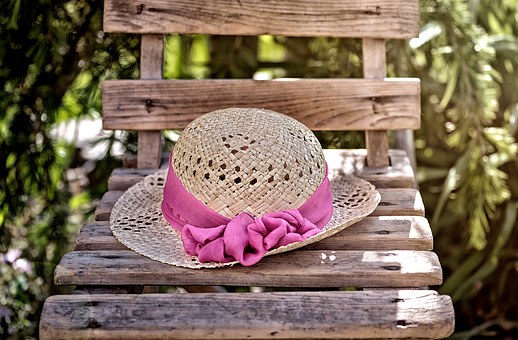
Agnes went to the shed, her head spinning.  How could this be?  She fetched a deck-chair and placed it in the middle of the grass.  She went to the kitchen and brought back a mug of tea and sat down.For a while she wept, for the lost garden in her dreams.  Then, eyes brushed dry with her cardigan sleeve, she took a deep breath in and waited.  I will listen to this garden, she thought, I will see what is here.

Maybe it will teach me about my life. garden chair
 

Map work

map handsI read this poem by Carol Ann Duffy and felt that deep-gut pull of recognition.  It happened when I went back to the village I grew up in.  In my mind I could feel the paths and lanes, could see the ditch around the church and the tiny, domed graves of long- dead children. I could see the trees, ivy-smothered, where we climbed and built camps, and the wide-open expanse of the fields, flattening to the marshes on the horizon.  This was the land of Pip and the prison hulks, estuary-edged.  I could see the grass, heaped up in the middle of St. Andrew’s Walk, where we rode our bikes and tried to get enough speed to put air between our tyres and the hummocked ground.  training-165021__340I could see the brickwork at the edge of Susan’s house, overlapping enticingly like a climbing wall, and remember the sensation of trying to scale it.  I could see the road, winding black snake, looping round the corner by the shops and down to Jonathan’s house, the pampas grass waving sentinel on the front lawns.
I go back with my new husband, to show him something of where I come from.  The place runs beneath my skin like a scar; horses on the brimp, silhouetted against winter sun, the welly-deep puddles on the bridle way.  It is a liminal place, jammed at the end of the bus route, an hour from town, a dormitory village for the oil-refinery and power station then, we had a wide open garden where strawberries grew abundantly and my grandy prepared bonfires  in the autumn mist.

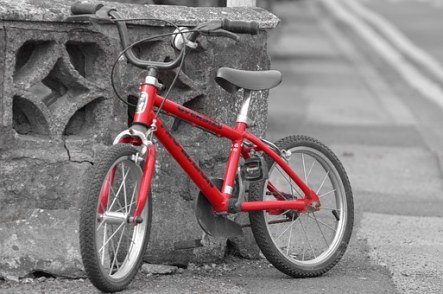
Firstly it is smaller than I remember.  The roads are narrower.  The vast expanse of the housing estate where we rode bikes is traversed in a few moments, the mountains of memory merely moderate landscaping.  Signs remind us that cycling is forbidden now.  The shops are shabby, the gardens cluttered with old plastic ride-ons and broken patio furniture.  The church, a cathedral once, is in fact, tiny.  I am lost between the powerful memories and the difference of reality.  Time has changed the place.  And me. I am no longer a six-year old in her cord trousers and pumps pedalling a red bike, no longer the pig-tailed eight-year old sitting in the musty shade of church waiting for Sunday School to start.  I have grown and the place has shrunk. Worst of all the prefab building which housed the primary school has been removed.  Its site forms part of the new-build school and houses crowd on the playing fields.

We drive away in a yellowing afternoon, looking out across the marshes, and I try to match the places to each other.  Memory is only partly true.

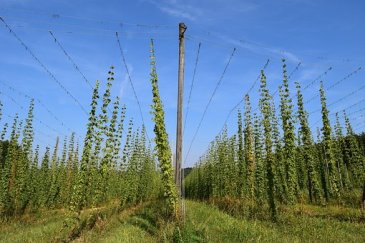
A similar moment comes when I’m walking home one day.  When I was nine we moved to a cathedral city. I take the path behind the main road, squashed between terraced side streets and a new housing estate.  I tell Simon that this was all hop fields when we used to walk this way to school.  That I went once with Martine and Natasha and we walked from Martine’s house, across the fields as far as the A2.  Martine’s family owned the farm then.  I remember the thrill of being on private land, the sense of secret wandering, exploration, the hop bines twisting above us in the late summer sun. The farm is gone now.  The oasts converted to apartments, the fields covered with tarmac, uniform shurbbery and identikit housing.  It feels like this has just happened.  That I blinked and the fields were gone.  But the estate is more than ten years old now,  and the memories come from over three decades distance.

hop fields Place is both itself and something else, the old is cleared a new layer takes it’s place.  The map is re-drawn.  But surely the land remembers.  I wonder whether it still feels the kiss of childhood steps, the wonder and secret magic of life before adolescence, like the brush of a butterfly’s wings or the step of a spider along your arm. I wonder if I am like this too.  Layered.  The child still seeking beauty and play while the woman covers her over with duties and diary commitments.  I wonder what it will be like when I re-draw the map.  When I erase the work of the past thirty years and begin again, using the stars for a compass and the earth as my blue-print.  Something sits now, beneath the skin, barely breathing, ready to crack open, on the edge of a new journey.
barley-field-1684052__340

Automotive

classic car

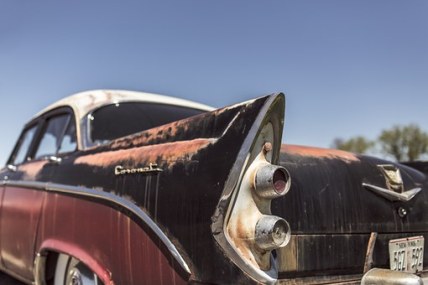
She is gifted it on her seventeenth birthday.  “It’s a classic,” says her Granpa, “If you look after her she’ll look after you.”  Her parents nod, smiling that smile of knowing parents have when they are in on a secret, the knowledge which comes from being three decades older.

A legacy like that captures her imagination.  She buys magazines, joins forums, spends weekends under the chassis, or the hood, tinkering and tightening.  She buys an oil can, and overalls. When she drives it to see friends, or takes them out on a summer’s day into the woods, coasting down the valleys, the windows wound all the way down, the smell of wax and hot leather, she feels pride at the way she has tended the machine, at her maintenance of the legacy.

It’s a never ending task.  The car eats oil, rust nibbles its way through the body, the parts gradually wear and are hard to replace.  She spends every spare penny keeping it going.  One Thanksgiving she opens up to her folks, “I love it,” she says,”It’s been such an important part of my life, and it was so much fun when I was younger, but it’s eating up my salary and I really need a car that works.”  “Oh my god,” they cry, “what are you saying? Your Granpa would be heartbroken, it was his pride and joy.”  Granpa looks down from the mantelshelf… it’s been three years now but she can still remember the smell of his tobacco.

She perseveres.  It’s a legacy.  She needs to keep it going.  The love, though, has gone.  This is about duty.  She repeats the story to herself, Granpa’s road trip in ’72 down route 66, her dad taking her mum on their first date.  She flicks through the photo albums.  But the shine has gone.  Her credit card is maxed out with paying for parts.

It’s a hot, August weekend.  There’s been no rain for weeks and the city is suffocating.  She decides to head up to her parents; the woods will be cooler, she figures.  It takes two hours to get beyond the city limits, traffic is nose to tail as everyone heads for the open spaces.  Eventually the roads clear, there’s not much now but dust and drying daisies, rattling in a hot wind.  She winds the window down.  She rang her parents the night before, telling them she’d be on her way.  She hints that she is bringing the car, but that she will get the train back.  She can’t face selling it for spares, the stories are too strong, she can’t face finally letting it go.  But she needs to park it up, in her minds eye the car will gradually disintegrate in the garage, the seats a commune for mice, tyres slowly emptying.

A sudden bang jolts her from the vision.  Smoke is rising from the hood, she struggles to hold the line of the road as she shifts down through the gears to bring the car to a halt at the roadside.  The smoke is thick and black, grabbing an old blanket from the back seat she tries to tamp it down. Using the blanket wadded up to hold the hot metal of the hood the peers in.  She feels the heat radiating from the sick vehicle as she stands back and considers.  In her heart she knew this moment was coming, couldn’t be put off forever.  At some point this particular journey would have to end. Dust devils whirl at the roadside as she squints along the tarmac distance, heat haze shimmering the horizon to a blur. She is still hours from home.  There is no traffic. No way to call for help.  She paces the road a while, looking at the car, hearing the stories, remembering the work she has ploughed into keeping it going.  A hawk calls  from above, circling on  a thermal.  She senses the expansive space it sits within.

For a moment the world tilts, shifts and something ends.

Wiping her soot blackened hands on her jeans, she pulls her bag from the trunk, closes the driver’s door and starts walking, each step moving her minutely away.

Time for some new stories.

woman walking

Monstrous

fierce

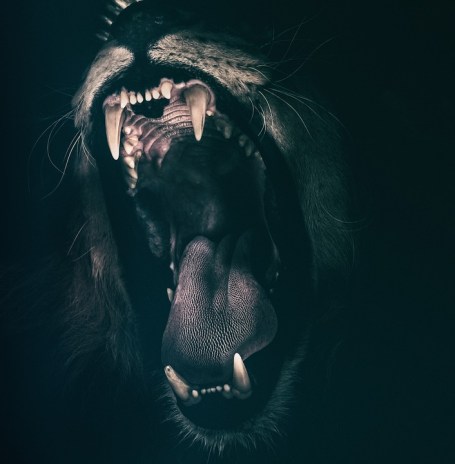
She spent a long time running.  The monster which hounded her needed to be trapped, to be managed.  She ran as far and fast as she could, hunting for answers to tame this demon.  She stayed up late at night with ink and parchment, scheming, studying, before rising before dawn and setting off again, always just ahead of her pursuer.  Sometimes she would encounter it, on a lonely woodland road or in open moorland.  They would wrestle, and, for a time, it would leave her alone.  Sometimes, by cunning arts, she would devise a means to hold it in check, a potion or enchantment, and for a time she would imagine it gone.  But it would appear, a shadow at the edge of vision, a lurking dis-ease in her quiet moments – and the chase would continue.

Months passed, years, decades.  She grew older.  Her hair began to streak with silver, her skin showed gossamer lines around eyes and mouth.  The monster aged too.  Its pursuit continued, but there were months when it vanished entirely.  One dark night she sought refuge in a cave. Water dripped gently from the roof and a cool breeze wafted up from the deeper dark. Exhausted after a long day’s ride she fell asleep.  She woke to the sense of presence.  A breathing nearby, the sound of movement.  Heart in her mouth she lay still.  Silence fell, a heavy cloak.  The darkness of the cave was impenetrable.  She waited.  Her heart slowed.  Her breathing steadied.

Time passed.  With the moon’s rise a grey light began to seep into the cave mouth and finger its way across the floor.  Slowly her eyes adjusted.  She could make out the monster’s bulk.  It had fallen asleep.  Gently, so as not to wake the beast she crawled across the floor.  Now that it lay here, vulnerable, her curiosity took control.  Perhaps she could kill it, finally, as it slept.  Perhaps she could find a way to trap it in the cave and secure her freedom at last.

She reached its first massive paw, black with five inch claws like iron.  She noticed the sheen on its black coat, the lines of muscle running across its legs.  Captivated by its strength she forgot.  Looking up she met with a bright, yellow eye, golden as ripe corn, staring straight down at her. Before she could move the giant paw lifted and pinned her to the ground. The beast shook itself, raised itself up onto its four legs and regarded her.

This is it, she thought.  It is over.  She waited for the claws to rip her stomach open, or tear her limbs asunder.  In this final moment she closed her eyes, and allowed herself to breathe.

It came like a thought, a whisper in her mind.

“Why are you running from me?”

She opened her eyes.

“Don’t you know who I am?”

She shook her head, whether to answer the question or shake the voice she wasn’t sure.

“All this time,” said the voice.

“I was afraid,” she answered, her voice barely a whisper.

“Do you know who I am?” the voice insisted, “Remember.”

She had a sudden picture of herself, barely in her fifteenth year, travelling on board a sailing ship to visit foreign lands.  Of adventures in strange cities.  Of long hours studying at the university.  Of romances.  Of her children and the struggles they had faced when the kingdom was invaded.  She recalled the disappearance of her husband, lost to dark enchantment, she remembered quests and trials.  At each of these times her nemesis had hounded her, clinging on at the edge of perception, pursuing her, increasing the challenges tenfold.

“I don’t know,” she breathed, the weight of the enormous paw making speech difficult.  “I thought you were my enemy,”

“You were wrong,” the creature spoke in her mind.

“I am your shadow,  your strength,  your power.”

It lifted its paw.  She lay very still.

“I was afraid,” she said, rubbing her chest where the paw had left its mark.  “I thought you would destroy me”

“Never,” the creature said, “I was there to keep you safe, to show you the way beyond your limitations, to help you reach the depths of your strength, beyond the thinking mind.”

“I didn’t know,” she said.  She wept a while then, and the creature waited.

Time passed.  A different light crept into the cave as day returned.

She stood, stretching her limbs, grown tired from the cold, earth floor.  The creature rose and shook itself.  They paused at the cave mouth, side by side, facing the dawn.

“What happens now?” she asked.  “If I am not running, what will I do?”

“Now,” said the creature, “You will live.”

summerfield-336672__340


Leaves

7DBBDC7E-0A15-43D3-960D-2C46B1C840E5It has started. On my knees in the dirt I have to pull them away to uncover the soil; brown, yellow, crisping, like old paper.
In the evening the air cools and the half-made moon wears a gauze cloak, her radiance seeping into the velvet around her.

I am living with ghosts. Old friends. Old friendships. I am haunted by the reality of a past present. I can remember  how that felt, the shared experiences, conversations. The triumphs, the survivals. I flick through the memory-album and it feels real.

There are a whole host of these people, once close, now distant, in time or space. I carry them with me, because they have held a special place. But it gets cluttered in my heart-space, crowded. I make futile attempts to reconnect. There is silence, a static crackle at the end of the line. They have moved on. New homes, new careers, new relationships, new lives.

I have too. The world turns and in a heartbeat something entirely other arrives.

The trees teach me how easy it is, when the breeze blows just so, to let go. There is a beauty and grace in shedding the old. A freedom too. Because in holding on I keep a version of myself who no longer exists. A way for them to know me. But she has gone, and I need to let that be. Or I cannot move; rooted to a spot, looking backwards, straining forward, burdened by old loves and likes, tired attitudes and thinking.

I open my hand, and watch the leaves fall. Shake my branches and dance in the breeze. You can see the shape of my soul etched against the sky.

Stop/ start

grass-546794__340Stop apologising.

You don’t make bad choices.  You think carefully. You review. You plan.  You seek guidance. You wait. You balance the options.

Stop doubting.

You are more capable than you dare to believe.  You can do this.  All of it. With bells on. You have the power. The wisdom. The grace. The humour.  You have the sheer nerve, grit, balls. The fire.  You have what it takes.  You always did.

But there was that voice.  The one that questioned.  That undermined.  That compared.

That voice talks bullshit.  It wants to keep you small.  Because small is safe.  Small fits behind the parapet, in the corner, under the stone.  Small is where you won’t be noticed.  Draw attention.

It began as a way to keep you safe.  But after.  After it was a way to contain. Manage. Silence. Chain.  Reduce.

You don’t need it now.  Now you are grown. Strong.  You survived.

Stop questioning.

Remember all those choices.  The ones people commented on, in an off-hand, semi-humourous tone.   They were yours.  You made them because you wanted to live in the most lively way you could.  Without compromises and half measures. In truth.  In honesty.  In vulnerability.  Authenticity.  Vibrantly. With joy.

Stop pretending.

That you can’t. Or won’t. Or don’t want to.  You do.  You can.  Oh my goodness if you could only see what I see. If you could only know the passion, the raw, molten energy I see pulsing below your skin, behind your smile, beneath your eye lids.

Stop denying.

The pain, the loss, the anger, the fear.  All of it is what makes you who you are. How you are.  All of this makes you strong.  Decades of life.  Of experience.  It moulds you. Shapes you.  Not to be regretted.  Hidden. Explained away.  To be celebrated.  To be worn.  To clothe you in your scars. Scar-clanned.  A badge of courage. Of honour.  The brave etched onto your skin.  Your soul.

Stop it.  Right now.

There is no time.  There is no time for more regret.  For more sitting in the corner wondering what happened.  This is the sharp slap, stinging across your cheek.  This is the ice-cold, breath-stealing, limb-numbing jump into the pool.  This is the jolt of the missed step.

Wake up.

You are ready.  It’s time to start. woman-2827304__340

Self Pity

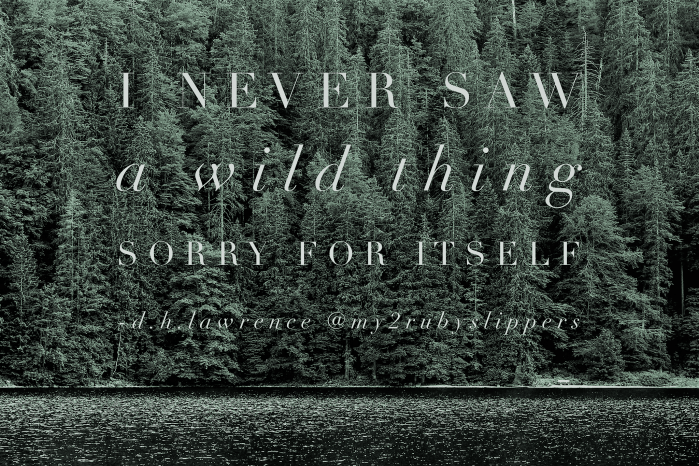
Wild Thing.png

Half way up the lane it drops into consciousness from a much watched movie, a fog breaking open, sun-split, revealing the hidden and obscured.  Turning onto the downs road, pressing the accelerator and shifting gear, I chant the words, over and over.  Each time they sound different and the meaning resonates like a gong, vibrations felt between muscle, in the cell’s core.

The unexpected twists and turns of life, the musings over paths taken, or lost.  The endless grey of depression, clinging like oily mist.  And then a sudden jolt, the brake stepped too firmly, a wet tile slick underfoot, the missed final step descending.  Wake up.

Having spent hours the past month buried in earth, haunting snails and woodlice with determined weeding, sinking into an awareness of nature and her patterns – the kaleidoscope of sunshine and showers, the cool of an overcast day, the pattern on a spider’s body, the silken length of her legs – having discovered a body which loves to work, the burn of limbs which have been used, the tingle of muscles overworked, I feel the wild waking.

And this truth. To live rather than reflect. To be rather than plan. To act and act again. To take the moment, a midnight-black berry, plump, ripe, and allow it to nourish, bitter sweet on the tongue.

How to witch

12B62583-B9A0-4D11-954E-85281E1F3E01Begin with the nudge behind your left ear. The whisper of the grass. The swelling and shrinking of the moon. Feel a yearning in your soul, your belly, your limbs, an ache calling you home.

Next question how you find the path (not realising you’re already on it) …start with purchasing…Books. Crystals. Altar tools. Essential oils. Sign up for online classes. Join Facebook groups. Follow the #witchesofinstagram. Google everything.

Next craft rituals, keep a book of shadows, lay out elaborate and mystifying tarot spreads, have a palm reading and study your natal chart. Read up on gods and goddesses.

Wake up one day and be captivated by the beauty of a bee on the lavender. Feel the earth pulse beneath your bare feet on dew soaked grass. Feel the breath beneath your ribs, thrill as a bat flies overhead on the hunt, feel your soul sing as you dip yourself whole in the clear, cold river.

Get simple. Find magic in shells and stones. In found objects or a twisted twig. Choose an acorn and a feather for your altar. Weave spells from string and pine cones, salt and kitchen herbs. 

Find the cauldron you seek tucked safely beneath your rib cage, behind your navel. Find your wand in your index finger. Feel magic beating in your blood and echoing in your bones, feel it rising up from the earth, warm and nourishing.

Know that you were born not made. That if they cut you in half it would say witch through to your marrow like a stick of peppermint rock. Be the magic you were made to be. Only you can.

Spiralling

fractal-1644492__340

When you come to the same place.  Revisiting. Wondering if you are repeating a pattern and finding instead you are standing on the spiral path, there are echoes, familiarity. But a different perspective. Viewpoints shifted.

Here we are then.

History repeating in a rebooted version.  My counsellor asked me what I have sent myself back to learn.  I am still wondering.

Today, heading down the A20 after an afternoon ramble, I dropped down into my life with the sensation of dream falling. I’ve spent weeks since our move trying to fit the previous strands of work and plans into a new mould.  Of course they don’t fit.  Nothing fits. But, waste not want not, I’ve been chopping and shifting and remodelling, those old wineskins again…My biggest worry has been about altering commitments. One of my work roles is regular, but uncontracted. I’ve been anxious about it, wondering how it will play out in the new term, what shape it will take this next year. I’ve been waiting for emails, full of tension, waiting for the reprimand, the call into the boss’s office…

Until.

Hold on one moment.

I’m the boss.

I’m self-employed.  I work for people on a casual basis, I go where the work is.  I weave together a range of different roles in a range of different places and this is how I earn a living. It’s a way of working which is in transition now my own children are grown and the need for a work pattern which fits with school holidays has gone.  It has been helpful though as I have recovered from burn out and had the flexibility to deal with family needs.

I have been working in this way as if it is for someone else.  I want to have happy clients, I seek to offer my best whatever I’m doing.  But I struggle to remember that there is no performance management coming up, no achievements to reach for promotion…So this anxiety is misplaced because the choices are ultimately mine to make…

Which spirals me back to another quest.  To claim my power.

Not the power of a dictator, all high boots and grandiose schemes, but the furnace-fire of my soul, bright jewel and essence, warmth, home.

I give it away. Locate it elsewhere. In others. In concerns and thoughts. I allow it’s energy to seep away and leave me cold. I fritter it in worries or fuss it away in perfectionism.

Perhaps I’m here again to reclaim that power. To uncover my maiden self and restore her, to recover the energy which fired me when I was younger, to reclaim my edges and the wild expanse of my soul.  Perhaps there is a chance to walk the shadow path to the edge of knowing and dip into the wild unknown.  Perhaps this turn of the spiral takes me away from one pattern and opens up a new way of walking through life.

The rules, it turns out, are just ideas, once questioned they disintegrate, rice paper on the tongue, dissolving. I am full of wonder that I can have taken so long to wake up to this.  Again.  But patterns have a power of their own, they are well established and easy. What if I run into this spiral, though, if I charge headlong beyond the next bend, beyond what I know and feel safe with, if I go fast enough, will that energy throw m outwards, into a new orbit?

A sense of expansiveness and promise now at the edge of perception. Freedom and hope.

Things I didn’t learn in school

waterfall-204398__340

This is the long, slow pause between terms.  Once full of harvest, now the days between the end of one school year and another stretch and bend, unshaped.  I am still working full-time but without the edges of school commitments that work is different daily and the lack of pattern unsettles me.

This time of year reminds me of my own schooling, the milestones of examinations ended, of the impending next step of the autumn term.  I went to a grammar school.  It’s  a system in this part of England of state “selective”  education.  I’m still in the process of healing that time in my life, seven years of vital psychological and emotional development locked into a pressure-cooker of academic achievement left a mark and some unhelpful patterns.  While I often think about those years and the way in which they shaped me, I am less inclined to reflect on what I have learned since or what I learned which was helpful.  This is what I’ve got so far…

1. The most useful thing you will learn in school is that touch-typing course you took in the lower sixth.

2. You can work for twenty-six years on a factory packing line and be happy.

3. In five years no-one will be interested in your A Level results. In ten years no-one will be interested in your degree class.

4. You know most of the things you need already, in your bones and blood, listen for them, they will steer you true.

5. Knowledge is not the same as power.

6. Your life is a growing and a gift not a program or schedule, feel into that.

7. You are absolutely and unequivocally unique.  This is a given, encoded in your DNA. Stop trying to be someone else.

8. After years of fault-finding in feedback and in self-evaluation you will need to say something kind to yourself everyday.  And mean it.

9. There is more than one way to live a life, question everything you thought you knew.

10. Nothing you do will prepare you for your actual life.  It will happen around you in ways you couldn’t imagine.  Learn to ride it, to flow with it, to breathe through it, thirty years of planning won’t stop the unexpected…